

The best homeschool Bible curriculum matches your child’s age and your family’s teaching capacity. For no-prep teaching, choose a literature-based full package like Sonlight. For steady, whole-Bible coverage, look at a chronological survey like Answers Bible Curriculum. If you’re teaching several ages at once, a thematic, multi-grade package like My Father’s World keeps everyone in the same book without splitting your week into five different lesson plans.
Before you commit to any homeschool bible curriculum, sample one lesson, read the parent guide, and check how many days a week it expects from you.
-
Sample one lesson from the publisher’s site before buying the full set
-
Confirm the parent or Instructor’s Guide before your first week
-
Ask how many days a week the program requires and whether that fits your rhythm
Pro Tip: Many families overbuy in August and undercorrect by October. Test one week’s worth of lessons with your actual children before ordering a full year.
Key Takeaways
The right homeschool Bible curriculum depends on matching program type to your child’s stage and your family’s available teaching time, not on finding one universally “best” option.
| Point | Details |
|---|---|
| Match style to stage | Story-based lessons work for early years; apologetics and inductive study fit middle and high school. |
| Check trust signals first | Sample lessons, parent guides, and stated pacing tell you more than marketing copy does. |
| Plan for multi-age teaching | Read one passage together, then split into differentiated activities by grade level. |
| Expect curriculum to change | Many families rotate programs as children move from elementary into apologetics-focused years. |
| Supplement, don’t replace | Bonafice’s family streaming library works as a low-prep hook or memory aid alongside any curriculum you choose. |
Table of Contents
What a Bible-Centered Curriculum Actually Includes
Christian homeschool resources generally follow one of three architectures. A whole-Bible curriculum covers Genesis to Revelation in sequence. A chronological program, like Answers Bible Curriculum, reorders events by timeline so your child sees the four-year narrative of Scripture unfold as one connected story rather than isolated Sunday-school stories. A topical or literature-based program weaves Scripture into broader subjects, pairing history, geography, and read-aloud books with biblical themes.
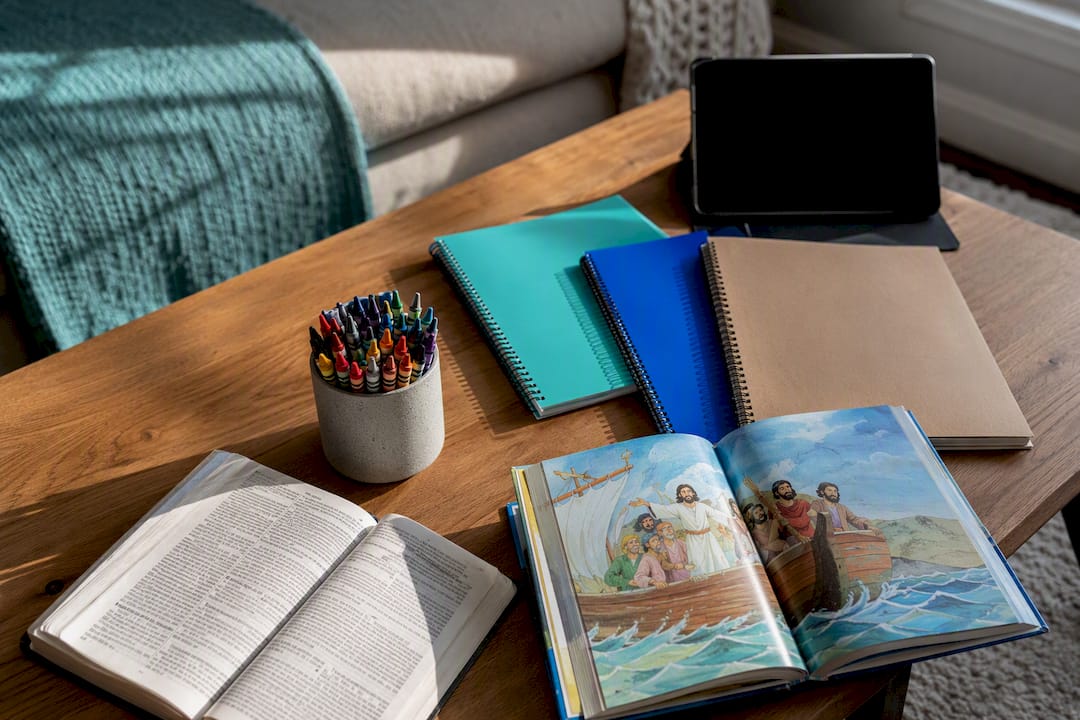
Scope and sequence documents tell you what the year actually covers and in what order, so you’re not guessing whether Leviticus gets skipped or whether apologetics shows up before ninth grade.
Look for these signals before you buy:
-
A published scope and sequence, not just a back-cover summary
-
A sample lesson you can preview without purchasing
-
A parent or teacher guide separate from the student material
-
Stated pacing (days per week, minutes per session)
-
Multi-age notes if you’re teaching more than one grade
-
A refund or guarantee policy, like Sonlight’s money-back guarantee
A guarantee that survives half a year of actual use tells you more about a publisher’s confidence than any marketing page does.
Bible Curriculum by Age and Stage
Homeschool scripture lessons should grow in depth as your child does, and most publishers build that assumption directly into their grade bands.
-
PreK through kindergarten. Keep it short. Story, repetition, and a memory verse each week beat any structured workbook at this age. Ten minutes of family devotion time does more than a thirty-minute lesson nobody remembers.
-
Elementary. This is where read-throughs, notebooking pages, and hands-on activities take over. Kids at this stage retain more from drawing a scene from Exodus than from reading a paragraph about it.
-
Middle school. Book-by-book study starts making sense here, along with an introduction to apologetics. This is the stage where “because the Bible says so” starts needing backup, and good middle-school materials supply it.
-
High school. Inductive study, formal theology, and transcript-ready coursework belong here. If you need a documented credit, confirm the publisher supplies rubrics and assessment tools built for that purpose.
-
Multi-age households. Read one passage together as a family, then split into differentiated follow-ups by grade level rather than running three separate curricula in parallel.
Many families rotate curriculum styles as children move between these stages. Early years favor warmth and familiarity with the text; later years shift deliberately toward worldview and apologetics training to prepare students for the questions the outside world will eventually ask them.
Formats and Lesson Components to Expect
A typical box or bundle includes a core textbook and a student notebook, though literature-based sets like Sonlight replace the textbook with curated books and an Instructor’s Guide that plans your whole week for you. Streaming video lessons have become common in newer programs. Apologia’s The Word in Motion pairs a textbook and notebook with streaming video and is commonly paced as a four-day-a-week course, which cuts prep time significantly for parents juggling multiple subjects.
Beyond the core materials, expect to see:
-
Printable notebooking pages and worksheets for record-keeping
-
Memory systems using motion, song, or repetition for younger learners
-
Activity kits and games tied to specific lessons
-
A choice between physical books, digital downloads, or audio formats
Choose your format based on your household’s tech comfort and budget, not on whichever option looks flashiest in a catalog photo.
A Checklist Before You Buy Any Bible Curriculum
Run through this before adding anything to your cart:
-
Define your goal. Are you after whole-Bible coverage, apologetics readiness, or integration with history and literature?
-
Confirm theological fit. Read the publisher’s statement of faith, not just the back-cover blurb.
-
Check the sample lesson. Does it read like something your child will actually engage with?
-
Match time to budget. Four days a week at fifteen minutes is a very different commitment than daily forty-five-minute sessions.
-
Ask about parent prep. Some programs are open-and-go; others expect you to read ahead each night.
-
Verify multi-age support. If you have three kids in three grades, does the program have a plan for that, or will you be running three curricula at once?
-
Look for a refund policy. A publisher willing to stand behind a half-year of use, like Sonlight, is telling you something about their confidence in the product.
Ask sellers directly about scope and sequence, pacing expectations, how assessment works, and whether high-school credit options exist if you’ll need a transcript later.
Pro Tip: If a curriculum page has no sample lesson, no visible scope and sequence, and no parent guide preview, treat that as a red flag rather than an oversight. Publishers confident in their material want you to see it before you buy.
Watch for vague course descriptions and confusing lesson flow. If you can’t tell from the sample how one week connects to the next, your child probably won’t either.
Using Streaming Media to Supplement Bible Lessons
Short videos work well as an opening hook, a memory-verse aid for younger kids, or documentary context for teens tackling harder apologetics questions. None of this replaces your curriculum. It just lightens the load on the nights you’re short on prep time.
A simple routine: play a ten to fifteen minute video related to the week’s passage, follow with guided discussion, then let each child respond through an age-appropriate activity or notebooking page.
-
Use short video as an opener, not a replacement for the lesson itself
-
Reserve documentary-style content for middle and high schoolers working through harder questions
-
Let younger children respond through drawing or motion-based memory activities
-
Save family movie nights for reinforcing a theme, not introducing new material
A single shared passage, read aloud as a family, then split into age-tiered follow-up activities, preserves devotion time together while still meeting each child where they are.
Why homeschooling parents keep adjusting their approach
Curriculum that felt right for a six-year-old rarely still fits at eleven, and that’s not a failure of planning. It’s just what growth looks like.
Consistency in showing up to Scripture together matters more than finding the perfect box set on the first try.
— Mark
A supplemental resource for family Bible time
Bonafice offers family-friendly streaming built around films, children’s programming, and short devotional media that fit naturally alongside whatever Bible curriculum your family already uses.
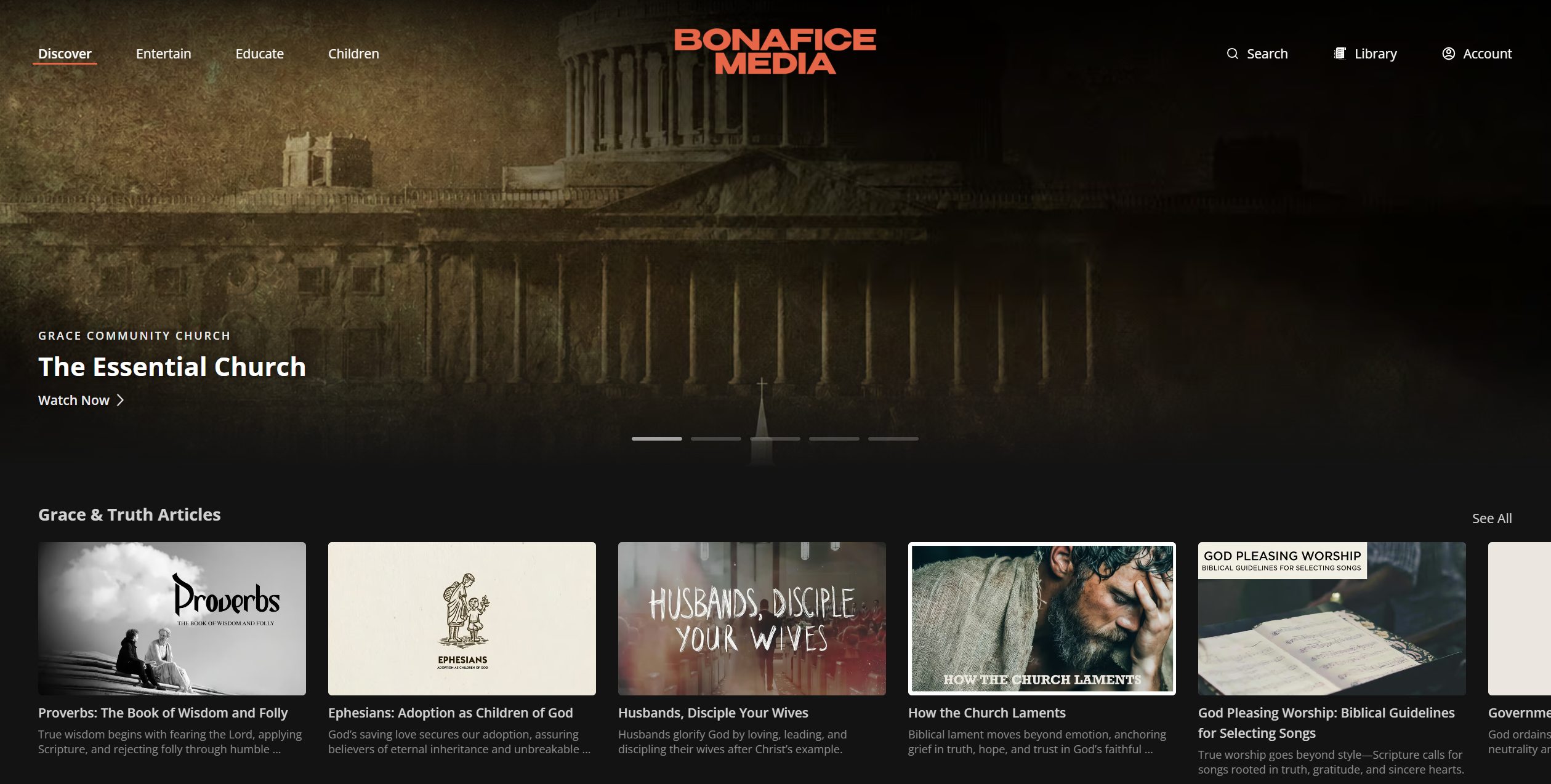
Think of it as a supplement, not a substitute. Use a short Bonafice video as the ten-minute hook before your weekly lesson, pull from the library for a memory-verse aid your younger kids will actually ask to rewatch, or set aside a Friday family viewing night to reinforce whatever theme your curriculum covered that week. It’s especially useful on the nights when your lesson plan is solid but your energy for a full read-aloud isn’t. Browse the current library on the Bonafice streaming platform and find a title that fits this week’s passage.
Sources
Review sample lessons and scope and sequence directly from Sonlight, Answers Bible Curriculum, My Father’s World, The Word in Motion, Master Books, and Not Consumed before you buy.