

Christian marriage videos are family-friendly films and streaming titles that portray marriage and family life through a faith-informed lens, showing couples navigating real struggles with grace, forgiveness, and prayer at the center. If you want to find safe, discussion-ready titles quickly, the fastest path is layering two things: trusted Christian review guides for content details, then a curated faith-first streaming library so you’re not gambling on titles that look wholesome but aren’t.
You don’t have to build that system from scratch every time you sit down with your family or your small group. A few reliable tools do most of the work for you:
-
Plugged In or Movieguide for scene-by-scene content notes before you commit an evening to a film.
-
A curated catalog like Bonafice, where the vetting has already been done for you.
-
Your own short checklist (we’ll build one below) so you’re not relying on memory alone.
Key Takeaways
Finding safe, discussion-ready Christian marriage videos comes down to layering trusted review sources with a consistent household checklist, then using a curated library to cut ongoing search time.
| Point | Details |
|---|---|
| Layer your review sources | Combine Plugged In or Movieguide content notes with mainstream ratings before deciding on a title. |
| Use an eight-point filter | Check theme, language, sexual content, violence, intensity, theology, role models, and age fit. |
| Match subgenre to your group | Biblical dramas, contemporary faith stories, and true-story films each suit different ages and settings. |
| Plan discussion before you watch | Write three to five guiding questions ahead of time so conversation doesn’t stall after the credits. |
| Confirm licensing for group screenings | Church or public viewings often need a separate performance license beyond a personal subscription. |
| Use a curated library for ongoing access | Bonafice centralizes vetted marriage-themed titles, reducing the vetting work for repeat viewings. |
Table of Contents
-
What Is the Christian Filter Checklist for Vetting Marriage Films?
-
How Do You Turn a Marriage Film Into a Faith-Building Activity?
-
What Are the Legal Considerations for Group or Church Screenings?
What Is the Christian Filter Checklist for Vetting Marriage Films?
A Christian filter is simply a repeatable checklist you run every title through before pressing play, and it works because it removes guesswork from a decision you’re often making at 8 p.m. with tired kids waiting. Think of it as eight quick questions, not a rulebook you have to memorize.
Run through these before committing to a film:
-
Thematic fit. Does the marriage storyline reflect covenant faithfulness, or does it glamorize the opposite?
-
Language. Check for profanity or crude dialogue that would derail a family viewing.
-
Sexual content. Even implied content matters more in marriage-themed films than in most genres, since intimacy is often central to the plot.
-
Violence or peril. Some faith-based dramas dealing with addiction, abuse, or loss include intense scenes that aren’t appropriate for younger viewers.
-
Emotional intensity. A film can be “clean” and still be heavy. Grief, infidelity, and illness show up often in this genre.
-
Theological framing. Does the film show faith shaping decisions, or is it decoration around a secular plot?
-
Role-model behavior. Do the characters’ choices, especially around conflict and forgiveness, model something you want your kids to imitate?
-
Age recommendation. Cross-check the film’s official rating against a Christian review site’s notes, since the two rarely tell the same story.
Layering sources matters more than picking one. Christian review sites like Plugged In and Movieguide give you scene-level breakdowns that a standard MPA rating simply doesn’t capture. Mainstream rating boards flag violence and language; they rarely flag whether a marriage subplot treats infidelity as a punchline or a tragedy. Pairing that with parental-control settings on your streaming device adds a second layer of protection, especially for households where kids sometimes browse on their own.
Once you’ve read the reviews, decide your viewing mode. Some films work fine as a family watch. Others are better reserved for a teen-and-parent viewing, where you can pause and talk. A few are worth postponing until your kids are older, no matter how strong the message is.
A simple three-step workflow keeps this from becoming a chore:
-
Preview the trailer together to gauge tone.
-
Read at least two layered reviews (a faith-based site plus a mainstream one).
-
Decide viewing mode: full family, teens-and-parents, or postpone.
Families who build consistent, biblically grounded standards rather than case-by-case judgment calls tend to raise kids who can evaluate content on their own later, which is really the long-term goal here.
Pro Tip: Keep a running note on your phone of films you’ve already vetted and your household’s verdict. It saves you from re-researching the same title six months later when someone in the family suggests it again.
What Types of Christian Marriage Films Should You Look For?
Not every marriage-themed Christian film fits every family, and that’s fine. The genre spans several distinct subgenres, and matching the right one to your group’s age range and mood makes a bigger difference than picking a “top rated” title at random.
-
Biblical or period dramas. These portray marriage within scripture or church history, often with formal dialogue and slower pacing. They tend to suit tweens through adults and work well for church small groups wanting scripture tie-ins.
-
Contemporary faith dramas. Set in the present day, these follow couples through infidelity, financial strain, or loss, with faith as the anchor for resolution. The strongest entries in this category show characters wrestling honestly with conflict rather than resolving everything in one tidy prayer scene, which is exactly what makes them useful for discussion. Best reserved for teens and adults.
-
Inspirational true stories. Dramatized retellings of real couples who overcame addiction, illness, or estrangement. These carry weight precisely because they’re not fictionalized for effect, and they work across a wide age range with light parental guidance.
-
Family comedies with marriage themes. Lighter fare where the marriage storyline is present but not the whole plot. These fit family movie nights with younger kids in the room.
-
Animated or children-oriented content. Marriage and parenthood shown through gentle, age-appropriate storytelling, often as a supporting theme rather than the main plot. Ideal for younger children who aren’t ready for adult relational drama.
The subgenre matters less than the question underneath it: does the film open a door to conversation, or does it just deliver a moral and move on? Films built around real dialogue between spouses, rather than narrated lessons, consistently give families more to talk about afterward.
How Do You Turn a Marriage Film Into a Faith-Building Activity?
A film becomes a spiritual formation tool the moment you plan around it instead of just watching it. That planning happens in three phases.
Before you press play:
-
Decide what conversation you actually want. Are you addressing conflict resolution, forgiveness, or commitment during hardship?
-
Match the film’s intensity to your group’s age range, not just the official rating.
-
Write down three to five guiding questions in advance, so you’re not scrambling for something to say when the credits roll.
While you’re watching, pause at natural turning points, especially moments of conflict, a character’s choice to forgive, or a prayer scene, and ask what you noticed rather than what you think.
Afterward, keep discussion short and specific rather than broad. Try questions like: What did the couple do well? Where did pride get in the way? How did prayer, or the absence of it, shape the outcome? Pair one or two questions with a relevant Scripture passage, a short journaling prompt, or a closing prayer.
Church groups planning seasonal screenings benefit from preparing a short discussion guide in advance and sharing it with parents ahead of time, so the conversation continues at home instead of ending when the group disperses.
Pro Tip: Ask “what would you have done differently?” instead of “what should they have done?” It gets kids and teens talking honestly instead of guessing the expected answer.
Why a Curated Streaming Library Simplifies Family Viewing
Running the full filter checklist on every single title gets exhausting fast, especially for church leaders planning several viewings a month. This is where a curated catalog earns its place in your workflow rather than replacing it.

Bonafice Media offers exactly that: a subscription streaming library built around Christian films, children’s programming, educational resources, and spiritual articles, all curated so families aren’t starting the vetting process from zero every time. A curated, faith-first catalog centralizes vetted marriage-themed titles and cuts down the hours parents and leaders would otherwise spend cross-checking review sites before every screening.
Bonafice fits naturally into the workflow you just built. You still preview and decide viewing mode; the platform simply narrows the pool of titles to ones already aligned with Christian values, so your checklist becomes confirmation rather than a full investigation. That’s especially useful for:
-
Parents choosing a Friday night family film without an hour of research first.
-
Church small-group leaders assembling a season’s worth of discussion-ready titles.
-
Christian educators looking for classroom-appropriate stories with clear conversation hooks.
Browsing Bonafice’s catalog is the natural next step once you know what you’re looking for.
What Are the Legal Considerations for Group or Church Screenings?
Streaming a marriage-themed Christian film for your own family carries no legal complications. Screening the same film for a church group, youth event, or public gathering is a different matter, and it’s one many well-meaning leaders overlook.
Most consumer streaming subscriptions, Bonafice’s included, are licensed for personal and household viewing, not public exhibition. Showing a film to a group beyond your immediate household, even in a church fellowship hall with no admission charged, can cross into public performance territory depending on the platform’s terms of service and the film’s underlying licensing agreement. This isn’t unique to faith-based content; it’s standard across the streaming industry.
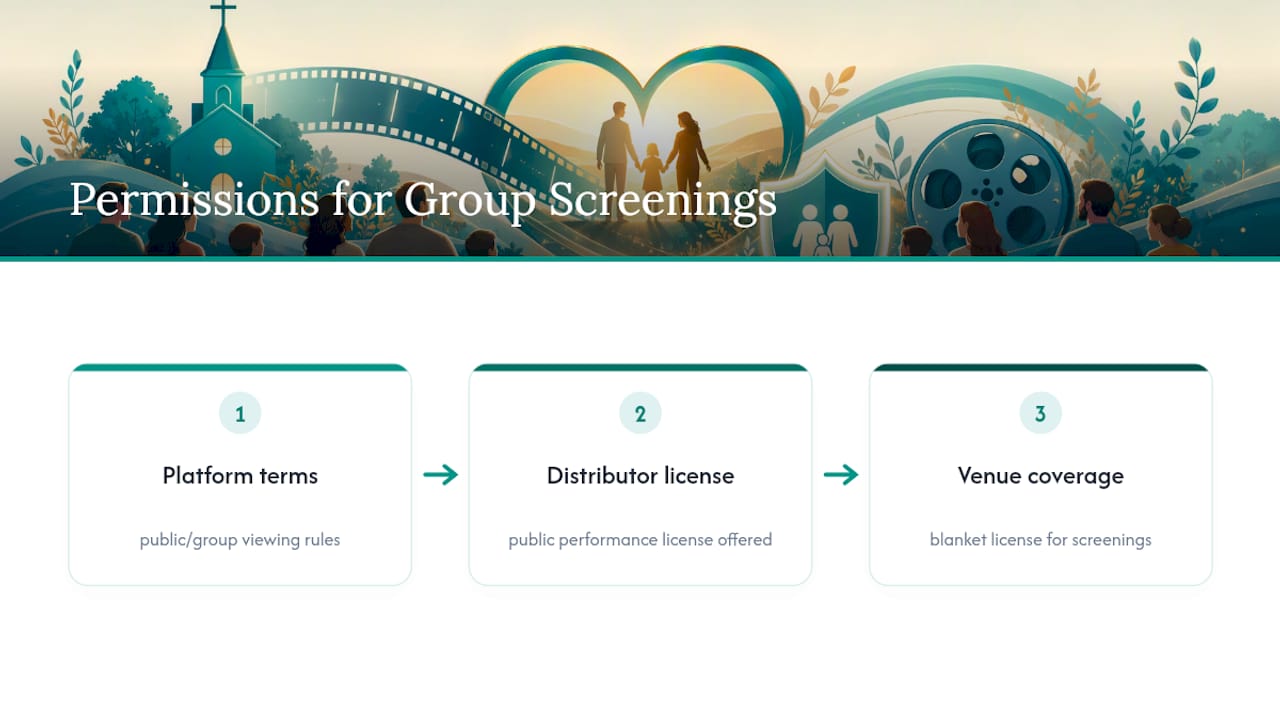
Before scheduling a group screening, check three things: the specific platform’s terms of use regarding public or group viewing, whether the film’s distributor offers a separate public performance license (many do, often at modest cost for churches), and whether your venue already holds a blanket license covering film screenings. Organizations like Christian Video Licensing International exist specifically to cover churches for exactly this situation, and many congregations already carry that coverage without realizing it applies here.
When in doubt, a quick email to the platform’s support team or the distributor clears this up faster than guessing. It’s a small administrative step that protects your church and keeps the focus on the film itself rather than a licensing dispute nobody wants.
The Real Gap in Most Marriage-Film Advice
Most advice on this topic stops at “check the reviews,” and that’s not wrong, it’s just incomplete. Reviews tell you what’s in a film. They don’t tell you what to do with it once the credits roll, and that’s where most families and small groups actually lose the value of watching together.
Here’s what I think gets underrated: films that let a marriage struggle stay unresolved for a while, showing real friction before any reconciliation, tend to teach more than the tidier ones. A movie that wraps up infidelity or resentment in one clean prayer scene feels safer, but it often gives families less to actually talk about. The harder films, the ones that sit in the discomfort a little longer, are usually the ones worth the extra parental preview.
If you take one thing from this article, prioritize the discussion plan over the film search. A mediocre film with five good questions afterward beats a five-star film watched in silence. Start there, then let a curated library like Bonafice handle the search itself.
— Mark
Watch With Confidence Through Bonafice Media
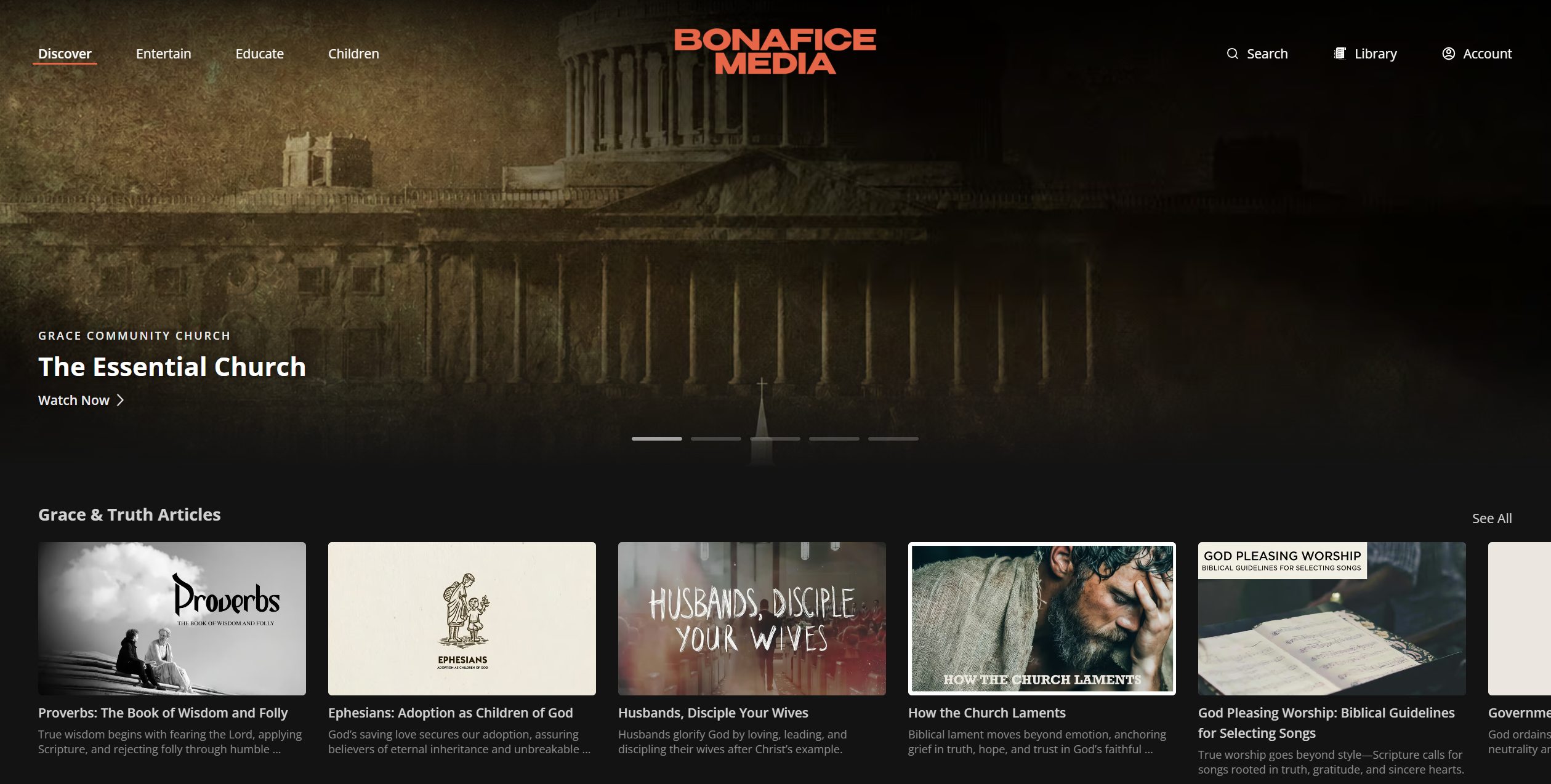
Bonafice gives you what the checklist above is designed to save you time on: a streaming library where the vetting is already built in. Instead of cross-referencing three review sites before every family movie night, you’re choosing from a catalog curated specifically for Christian households, including marriage-themed dramas, children’s programming, and discussion-ready spiritual content.
This fits naturally for parents planning a weekly family film night, church leaders assembling a season of small-group screenings, and educators looking for classroom-safe stories with built-in conversation value. You still bring the discussion questions and the discernment; Bonafice narrows the search so you’re spending your time on the conversation, not the hunt. If you’re ready to stop rebuilding your vetting checklist every Friday night, browse the current catalog on the Bonafice app and see which marriage-themed titles fit your family’s next viewing.