

The fastest way to learn Christian apologetics on video is a mixed approach: short clips under ten minutes for quick answers to specific objections, plus one or two longer lecture playlists for systematic depth. Start with a curated library like Bonafice rather than an open YouTube search, since curation cuts vetting time and protects doctrinal reliability. The sections below walk through formats, teaching use, and how to judge quality before you press play.
TL;DR:
- Short videos under ten minutes are ideal for quick responses to specific objections, but may lack depth for systematic understanding.
- Longer lecture series and playlists are better suited for building a comprehensive framework, especially when linked to related material.
- Trustworthy videos should align with confessional Reformed theology, source claims properly, and maintain a respectful, engaging tone.
- Using videos with guided discussion or follow-up reading improves retention and helps young learners connect arguments to Scripture.
- Bonafice Media offers a curated library of over 1,300 vetted, doctrinally reliable videos suited for families and small groups.
Table of Contents
- Which Christian Apologetics Videos Should You Watch First?
- How Do You Use Apologetics Videos with Teens and Small Groups?
- How Do You Know if an Apologetics Video Is Trustworthy?
- Why Families Trust Bonafice Media for Apologetics and Faith Formation
- Where Did Christian Apologetics Come From?
- What Arguments Show Up Most in Apologetics Videos?
- Which Videos Answer Today's Toughest Challenges to Christianity?
- A Note from the Bonafice Media Team
- Start Watching with a Library Built for Reformed Families
- Sources
Which Christian Apologetics Videos Should You Watch First?
Apologetics is not a debate hobby. It flows from a direct command in 1 Peter 3:15, which tells believers to be ready to give a reasoned defense of their hope, and to do it with gentleness. That single verse should shape what you watch and how you watch it. Video content built on that foundation tends to fall into three practical categories, and knowing which one fits your moment saves you from either wasting time or drowning in material you're not ready for.
Short clips (under 10 minutes) work best when you or your teen just got hit with a specific objection: "Didn't the Bible get changed over centuries?" or "How can a good God allow suffering?" These clips are built for immediate, conversational answers, not comprehensive arguments. STR has compiled a helpful list of short apologetic videos that church leaders already use to introduce arguments and spark discussion, which tells you this format has real staying power in youth and small-group settings.
Playlists and lecture series (15 to 60 minutes per session) suit systematic study. This is where you build a framework instead of collecting scattered answers. John Lennox's recorded conversations on faith and reason, and his newer masterclass responding directly to atheist critics on the problem of evil, model this format well. Each video links to related material, so one good lecture often becomes a self-extending study path.
Debates, Q&A sessions, and panel talks show you how a mature apologist handles a live challenge, not a scripted one. William Lane Craig's academic lectures pair rigorous argument with a humble tone, which is exactly the posture 1 Peter 3:15 calls for.
Where to find these formats matters as much as the formats themselves:
- Bethinking.org's video library curates short talks, panel discussions, and full lecture series in one place.
- Ministry sites for specific speakers (Lennox, Craig) host their own back catalogs with related-content links.
- Bonafice Media organizes apologetics-friendly content inside a broader family and theology library, so you're not jumping between five different sites.
How Do You Use Apologetics Videos with Teens and Small Groups?
A video by itself rarely produces lasting understanding. Practitioners who work with youth groups consistently find that standalone viewing, without follow-up questions or reading, fades fast. The fix isn't a longer video. It's a structure around the video you already have.
Here are two templates you can run this week.
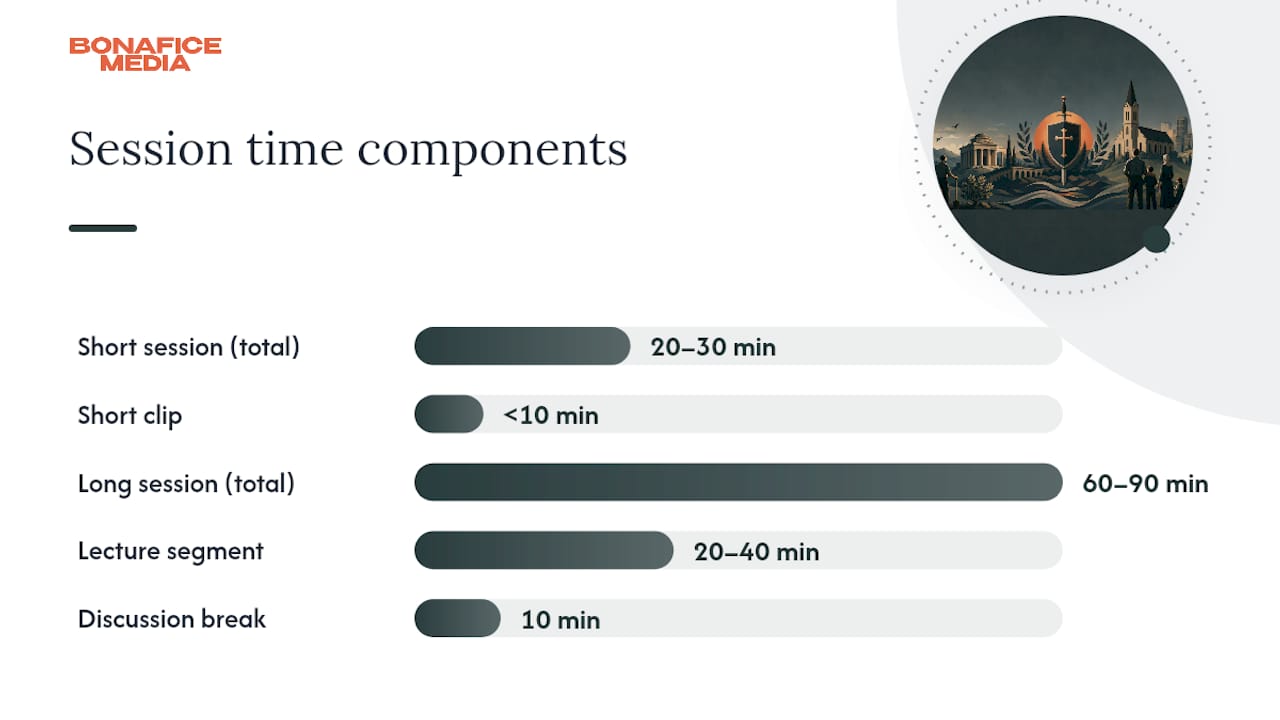
- Short clip plus discussion (20 to 30 minutes total). Watch one clip under ten minutes. Pause immediately and ask: "What claim is this person making? What evidence do they give? Where does this connect to a Bible passage we already know?" Close by reading the relevant passage together from a translation like the Legacy Standard Bible.
- Longer lecture plus guided reading (60 to 90 minutes). Watch a 20 to 40 minute lecture segment, stop for a 10 minute discussion break, then finish the segment. Assign a short reading tied to the topic for the following week.
Sean McDowell's guidance for student ministry backs this approach directly: he recommends short, accessible videos paired with curricula that answer the questions teens are actually asking, rather than material aimed at seminary students.
Discussion prompts that hold up across most videos: What is the speaker's central claim? What historical or evidential support do they cite, not just rhetorical force? How does this connect to a specific Scripture passage?
Pro Tip: Before you show any video to a youth group, watch the whole thing yourself first and note one place where you'd add a Scripture cross-reference. That fifteen-minute prep step is usually the difference between a video that sparks real conversation and one that just fills time.
Facilitator note for parents and youth leaders: your job is to preserve doctrinal integrity, not just play a video and hope it lands. If a speaker's framework leans outside Reformed conviction on a secondary point, say so plainly before moving on.
How Do You Know if an Apologetics Video Is Trustworthy?
Not every video with "apologetics" in the title deserves your trust or your teenager's attention. A quick checklist filters out weak material before you waste a session on it.
- Theological alignment and speaker credibility. Does the speaker hold to historic, confessional Christianity, and can you verify their academic or ministry credentials?
- Argument quality and documentation. Are claims sourced, or is the speaker relying on assertion and emotional appeal? Prioritize the why behind an argument, not just a confident delivery.
- Format and length matched to your audience. A 45 minute academic lecture will lose most 14 year olds. A 6 minute clip won't satisfy an adult study group wrestling with the problem of evil.
- Production quality, tone, and available notes. Civil tone toward opponents, clear audio, and (when available) captions or a companion outline all signal a video built for teaching, not just clicks.
That verse from 1 Peter 3:15 sets the standard here too: gentleness and respect aren't optional extras in apologetics content. A video that mocks skeptics instead of answering them fails the test regardless of how sharp the argument is.
One overlooked filter: check whether the video points anywhere beyond itself. The strongest apologetics content, including the Lennox and Craig material referenced above, links to related lectures, transcripts, or written follow-ups. A video that dead-ends after the credits usually wasn't built for serious study.
Why Families Trust Bonafice Media for Apologetics and Faith Formation
Vetting apologetics content one video at a time is slow work, and it's easy to land on something doctrinally shaky without realizing it until you're mid-discussion with your kids. Bonafice Media exists to remove that guesswork by curating a library of more than 1,300 pieces of theologically sound, family-appropriate content in one place.
That curation matters more than volume. Every title is reviewed for consistency with historic, confessional Christian conviction before it's added, which means you're not sorting through prosperity-gospel messaging, intersectional framing, or other content that doesn't belong in a Reformed household. Bonafice provides the media library; it does not supply a teaching curriculum, so pair its video content with a curriculum you've chosen separately, or with a study guide from a source like Grace and Truth Press.
Access details:
- Subscribe at App for $4.99 per month or $44.99 per year.
- iOS and Android apps are available now, with a TV app planned.
- Cast to a television using Chromecast through Chrome, or mirror your device screen.
| What you get | Why it matters |
|---|---|
| 1,300+ curated items | Less time vetting, more time discussing |
| Reformed doctrinal screening | Confidence for family and church use |
| Mobile apps, casting support | Watch on the device you already have |
| No built-in curriculum | Pair with your own study guide or lesson plan |
Where Did Christian Apologetics Come From?
Apologetics is not a modern invention built for YouTube debates. The word itself comes from the Greek apologia, meaning a reasoned defense, and the practice traces directly to the New Testament's own command in 1 Peter 3:15 to be ready with an answer for the hope believers hold.
Early church figures like Justin Martyr and Tertullian wrote formal defenses of the faith against Roman accusations and philosophical challenges within the first few centuries after Christ. Augustine's City of God answered pagan claims that Christianity had caused Rome's decline. The medieval and Reformation eras sharpened the discipline further: Reformed thinkers grounded apologetic argument in Scripture's own authority rather than starting from neutral philosophical ground, a distinction that still separates confessional apologetics from generic "evidence for God" content today.
The twentieth century brought a wave of specialists: C.S. Lewis for popular-level reasoning, Cornelius Van Til for presuppositional method, and later figures who moved the discipline onto video and podcast formats as those media matured. What hasn't changed across two thousand years is the goal: defend the faith clearly, and do it in a way that reflects Christ's own character, not just a sharp argument.
What Arguments Show Up Most in Apologetics Videos?
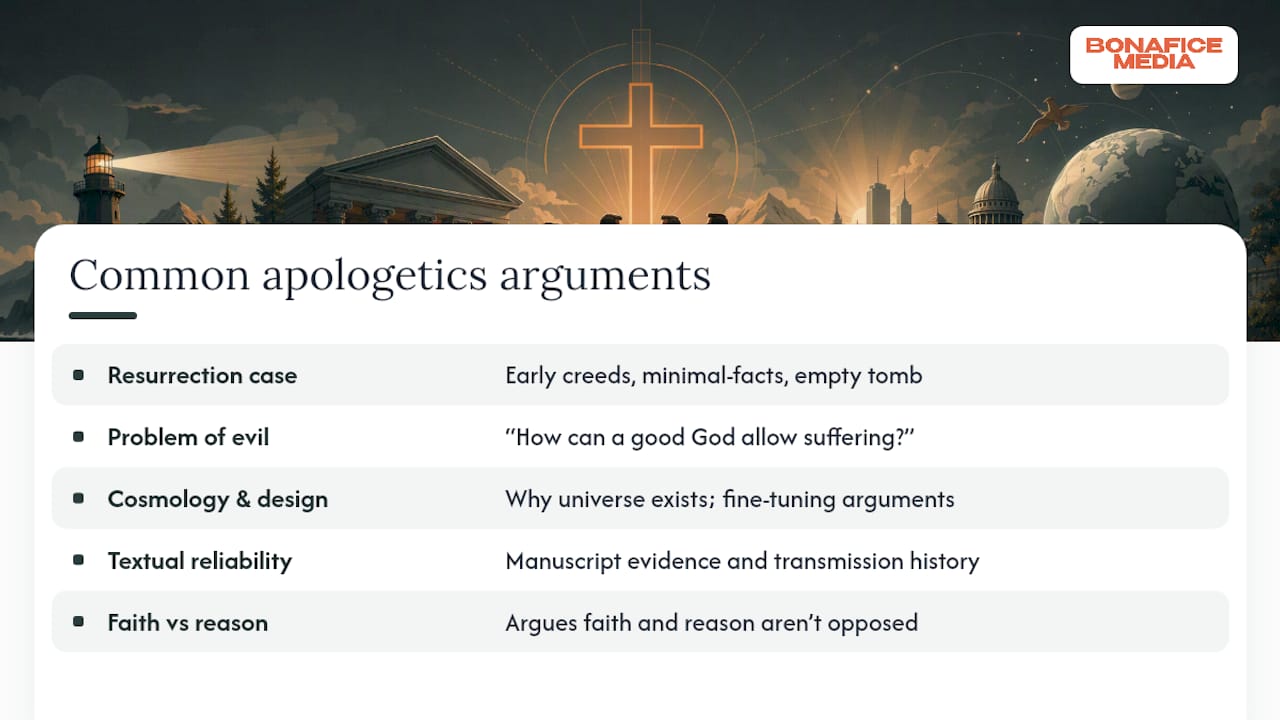
Most apologetics videos circle back to a handful of recurring arguments, and recognizing them helps you follow a lecture instead of getting lost in unfamiliar vocabulary halfway through.
The historical case for the resurrection anchors a huge share of video content, since it's the hinge claim of the entire faith. Expect discussion of early creeds, minimal-facts arguments, and the empty tomb.
The problem of evil comes up constantly, often framed as "how can a good God allow suffering?" John Lennox's masterclass responding to a prominent atheist YouTuber tackles this directly and models a calm, evidence-based response rather than a purely emotional one.
Cosmological and design arguments address why the universe exists at all and why it appears finely tuned, drawing on both philosophy and the natural sciences.
Textual reliability of Scripture answers the recurring claim that the Bible was corrupted over centuries of copying, usually through manuscript evidence and transmission history.
Faith versus reason gets treated as a false dichotomy in strong apologetics content. Lennox's video on whether faith is just wishful thinking argues the two aren't opposed at all, a theme worth returning to whenever a skeptic frames belief as anti-intellectual.
Watching for these five threads across different speakers helps you build a mental map instead of treating each video as an isolated argument.
Which Videos Answer Today's Toughest Challenges to Christianity?
Contemporary skepticism doesn't usually arrive as classical philosophy. It shows up as a viral clip, a confident YouTuber, or a meme, and it moves fast. The strongest current apologetics videos meet that format head on instead of retreating to purely academic settings.
John Lennox's direct response to an atheist YouTuber on the problem of evil is a clear example: it's a masterclass built specifically to engage a popular online challenge, not a generic seminary lecture repackaged for the internet. That format matters, because teens and young adults are far more likely to have encountered the original challenge online than in a textbook.
For questions about religious pluralism, gender and identity claims, and the reliability of Scripture under modern scrutiny, look for speakers who cite primary sources and historical documentation rather than relying on rhetorical momentum. William Lane Craig's academic lecture material, available through Reasonable Faith, consistently models that documented approach even when addressing hostile audiences.
Short-form curated lists remain useful here too. The STR collection of short apologetic videos was built precisely so church leaders could hand a teen or new believer a quick, focused answer to a live cultural challenge without assigning an hour-long lecture first.
A Note from the Bonafice Media Team
We built Bonafice around a simple conviction: families deserve media they can trust without a screening process. Every apologetics-adjacent piece in the library gets weighed against confessional, Reformed standards before it earns a place there, because doctrinal drift is easiest to miss when it's dressed up in polished production.
We select material that treats Scripture as the final authority, not one voice among many. If you're starting today, pair a short clip with one guided discussion, then move into a longer playlist once the questions get specific. That's the pattern the library is built to support.
— The Bonafice Media Team
Start Watching with a Library Built for Reformed Families
Bonafice Media gives you what an open YouTube search can't: a library already screened for doctrinal reliability, so you spend your evening discussing the resurrection with your kids instead of previewing five videos to find one that's safe to show them. That's the real advantage here, not just more content, but content you don't have to second-guess.
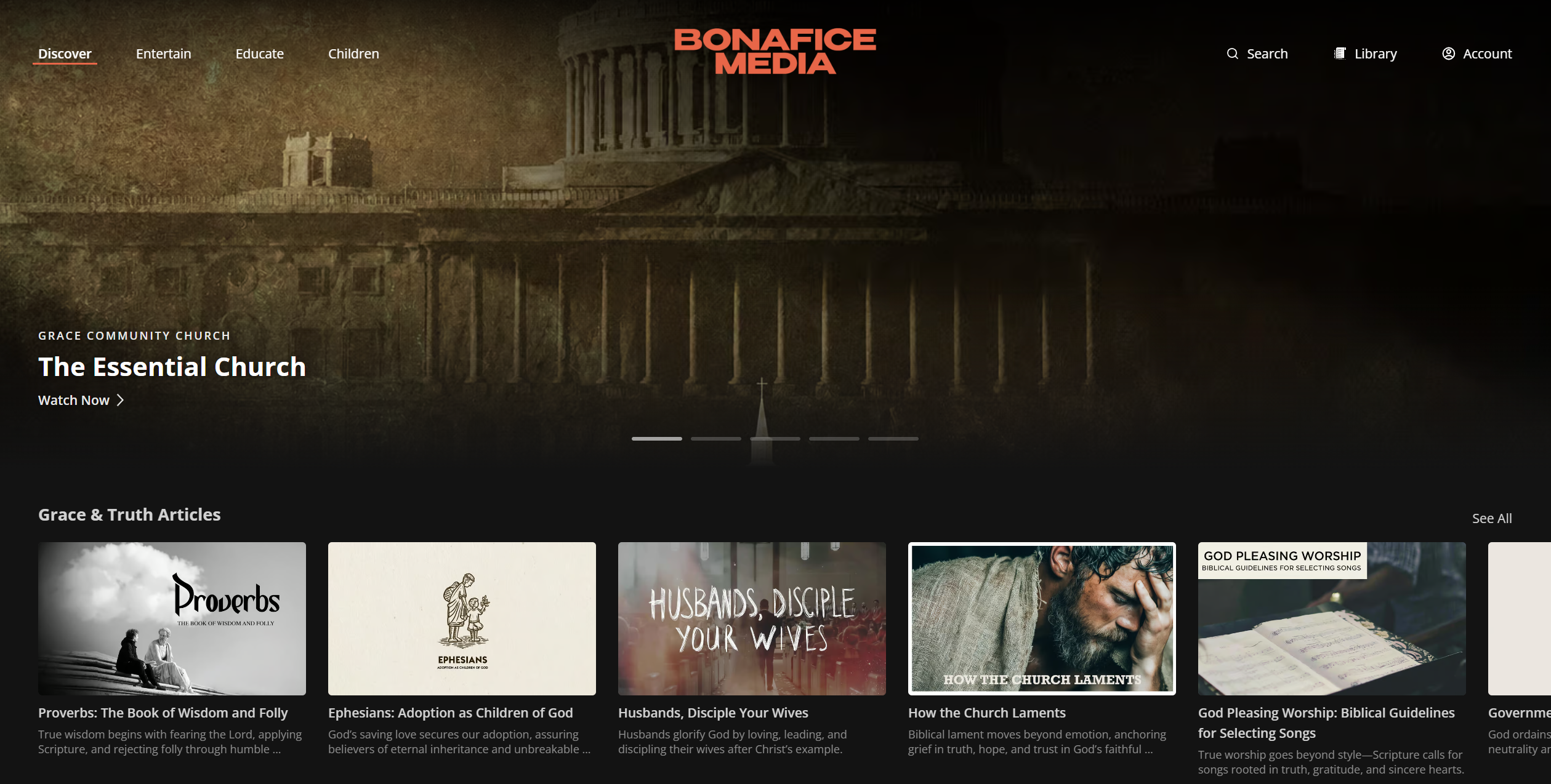
The library runs alongside 1,300+ pieces of family-friendly and theologically sound programming, covering film, music, and teaching content beyond apologetics alone, all built for households and small groups who want Reformed conviction as the baseline, not an afterthought. If you're weighing formats for younger kids specifically, this comparison of podcasts versus video platforms is worth a look before you decide how your family will watch. Bonafice does not supply a full teaching curriculum, so plan to pair its video library with a curriculum or study guide you select separately.
Start a subscription at App for $4.99 per month or $44.99 per year, install the iOS or Android app, and queue up your first playlist tonight.
Sources
- Bethinking
- What are the best apologetics resources for students? — Sean McDowell
- Is faith just wishful thinking? — John Lennox
- A philosopher’s calling: William Lane Craig on faith, reason & apologetics — Reasonable Faith
- Resource: A Helpful List of Short Apologetic Videos — STR
This article was created with AI assistance under human direction and review. Bonafice Media uses AI as a tool to be faithfully stewarded, never as a substitute for human judgment, study, creativity, or responsibility. Content is reviewed for accuracy, biblical faithfulness, and clarity before publication. Scripture references use the Legacy Standard Bible as applicable. It's for general educational and informational purposes only and is not professional, legal, financial, or pastoral advice.