

Start this week with one short book, one short video, and a standing 30-minute weekly conversation. That is the whole entry point for effective apologetics for teens: mentorship first, content second. Pick a resource that matches your teen's reading level, then commit to the conversation before you commit to a curriculum. Everything else in this guide builds on that single habit.
TL;DR:
- Focus on building trust through short books, videos, and conversations before introducing comprehensive curricula or debate manuals.
- Use five-minute videos and introductory books that match the teen's reading level, followed by open discussions on a single topic each session.
- Choose age-appropriate curricula ranging from short multi-week studies for middle schoolers to immersive programs for older teens and graduation-level projects.
- Vet videos and materials for Scripture affirmation, questions-eliciting tone, and doctrinal clarity before use with teens.
- Rely on curated platforms like Bonafice Media that vet content according to confessional Reformed standards, saving time and ensuring doctrinal soundness.
Table of Contents
- What Apologetics for Teens Should Look Like at the Start
- Structured Curricula and Courses: What Fits Home, Church, or Immersion Programs
- Which Short-Form Videos Actually Work With Teens?
- The Mentorship-First Method: How to Actually Teach This
- A Three-Stage Progression From Middle School to Graduation
- How to Choose Materials: A Quick Checklist
- Bonafice Media Perspective: Why Curation Matters for Families
- Getting Started With Bonafice This Week
- Sources
What Apologetics for Teens Should Look Like at the Start
Christian apologetics for youth does not begin with a debate manual. It begins with a short, well-written book, a five-minute video, and a parent or leader willing to ask questions instead of lecturing. The goal at this stage is exposure and trust, not mastery. Teens who feel safe raising doubts out loud engage far more honestly than those handed a stack of arguments to memorize.
A handful of starter resources cover the ground well:
- "Cold Case Christianity for Kids" or the teen edition by J. Warner Wallace, built for middle school readers who like investigation-style reasoning.
- "Mama Bear Apologetics Guide to Sexuality" and similar topical guides for parents to read alongside a teen, grades 8 and up.
- An apologetics study Bible for students, which pairs Scripture with short sidebar notes addressing common objections right where the text raises them.
- "Stealing from God" by Frank Turek for high schoolers ready for a slightly denser argument on the moral and cosmological cases.
- A short animated explainer video (3 to 5 minutes) on a single topic like the design argument, watched together and followed by two or three open questions.
Pair each book with a single discussion prompt rather than a full study guide. A short introductory book plus a short video covers more ground in a week than a thick textbook covers in a month.
Structured Curricula and Courses: What Fits Home, Church, or Immersion Programs
Teen apologetics resources generally fall into three categories, and picking the right one depends on your teen's age and how much prep time you actually have.
- Short multi-week studies (4 to 6 weeks, 20 to 30 minutes per session) work well for middle schoolers or a first pass with high schoolers. Minimal leader prep required.
- Semester-length curricula, often built as a one-year course with teacher guides, daily schedules, and worksheets, suit homeschool families wanting defined grade equivalencies and a full academic year of material, similar to the structure in Master Books' Apologetics in Action.
- Immersive programs, such as summer worldview conferences or weekend intensives, fit older teens (16 and up) who have already worked through foundational material and are ready for sustained, discussion-heavy engagement.
If you are leading a small group or a single family, adapt semester curricula by cutting each lesson in half and spreading it over two sessions. Most youth-focused programs now ship with modular lesson structures and leader handbooks specifically to ease that kind of adaptation.
Which Short-Form Videos Actually Work With Teens?
Youth apologetics videos work best in the 3 to 10 minute range, long enough to make one clear argument and short enough to hold attention through a phone-scrolling generation. Use clips on single topics: the resurrection, the reliability of Scripture, the moral argument, one clip per session.
After watching, run a 10 to 20 minute discussion. Ask what the teen agreed with, what felt weak, and where they have heard a counterargument at school. Before showing anything, run it through a short vetting checklist:
- Does the content affirm the authority and inerrancy of Scripture?
- Does the tone invite questions rather than mock skeptics?
- Is the theology consistent with Reformed, confessional teaching rather than prosperity or seeker-driven framing?
- Is the pacing appropriate for your teen's age and attention span?
Curated platforms save real time here, since every clip has already cleared that filter before it reaches your playlist.
The Mentorship-First Method: How to Actually Teach This
Teens need a trusted adult they can ask hard questions of without fear of a canned answer or a disappointed look. That single dynamic, more than any curriculum, determines whether apologetics sticks. The 7×7 Conversations model from Apologetics, Inc. builds its entire leader training around this: equipping adults for conversational discipleship matters as much as the content itself.
A simple four-step approach works across ages:
- Begin with the teen's own question. Do not open with your prepared topic; open with whatever doubt or comment they already raised this week.
- Introduce a short piece of content. A five-minute video or a single book chapter, never a full lecture.
- Facilitate discussion, don't deliver a monologue. Ask what they found convincing and what they didn't.
- Model charity and hope. Correct gently, and end on the confidence of the gospel rather than the weakness of the objection.
Raising expectations while starting with hope rather than fear changes how teens receive hard material. A combative, doom-laden tone alienates Gen Z students faster than any hard question ever will.
Pro Tip: Keep a running list of every question your teen asks over a month. Patterns will emerge, usually around suffering, science, or sexuality, and that list becomes your next six weeks of lesson planning.
Leaders should hold three things steady in every session: a warm tone, realistic expectations for how fast doubts resolve, and a gospel-centered frame that never lets the conversation end on the objection instead of on Christ.
A Three-Stage Progression From Middle School to Graduation
Apologetics curriculum for teens should deepen with age rather than repeat the same material louder.
- Middle school: bite-sized videos (3 to 5 minutes), single-chapter readings, and one guided question per week. Goal: comfort raising doubts out loud.
- Early high school: intermediate books, short multi-week studies, and clips tackling one argument at a time (cosmological, design, moral). Goal: ability to state an argument in their own words.
- Late high school: semester curricula, a longer research project on one contested topic, and an immersive conference or retreat with a required debrief conversation afterward. Goal: confident, unscripted conversation with a skeptical peer.
Measure progress by conversation, not test scores. A teen who can calmly walk a friend through one argument has learned more than one who memorized ten.
How to Choose Materials: A Quick Checklist
Before adopting any book, video, or curriculum, run it through six questions:
- Does it match the teen's reading level and current confidence, not just their age on paper?
- Is the theology confessional and Scripture-first, not vague or seeker-sensitive?
- Does it include discussion questions or a leader guide, not just content to absorb?
- Can you verify the author's credentials and doctrinal position?
- Does the time and cost fit your actual weekly schedule, not an ideal one?
- Does the tone stay hopeful and charitable, or does it drift toward mockery and fear?
Ask any curriculum provider directly: who wrote this, what doctrinal statement do they hold to, and what does a typical session actually require from a leader with no seminary training. If those answers are vague, keep looking.
Bonafice Media Perspective: Why Curation Matters for Families
Parents searching for teen apologetics resources face a flooded market, and not all of it holds to sound doctrine. Bonafice Media's library exists precisely because sorting theologically sound content from seeker-driven or prosperity-adjacent material takes real discernment most families don't have hours to spend on. Every piece added to the platform gets vetted against confessional Reformed standards before a family ever sees it, which is the actual value of curation over an open search bar.
— The Bonafice Media Team
Getting Started With Bonafice This Week
Bonafice Media gives you a shortcut past the vetting problem: every film, curriculum, and short clip in the library has already been checked against confessional Reformed standards, so you spend your time on the conversation, not the research.
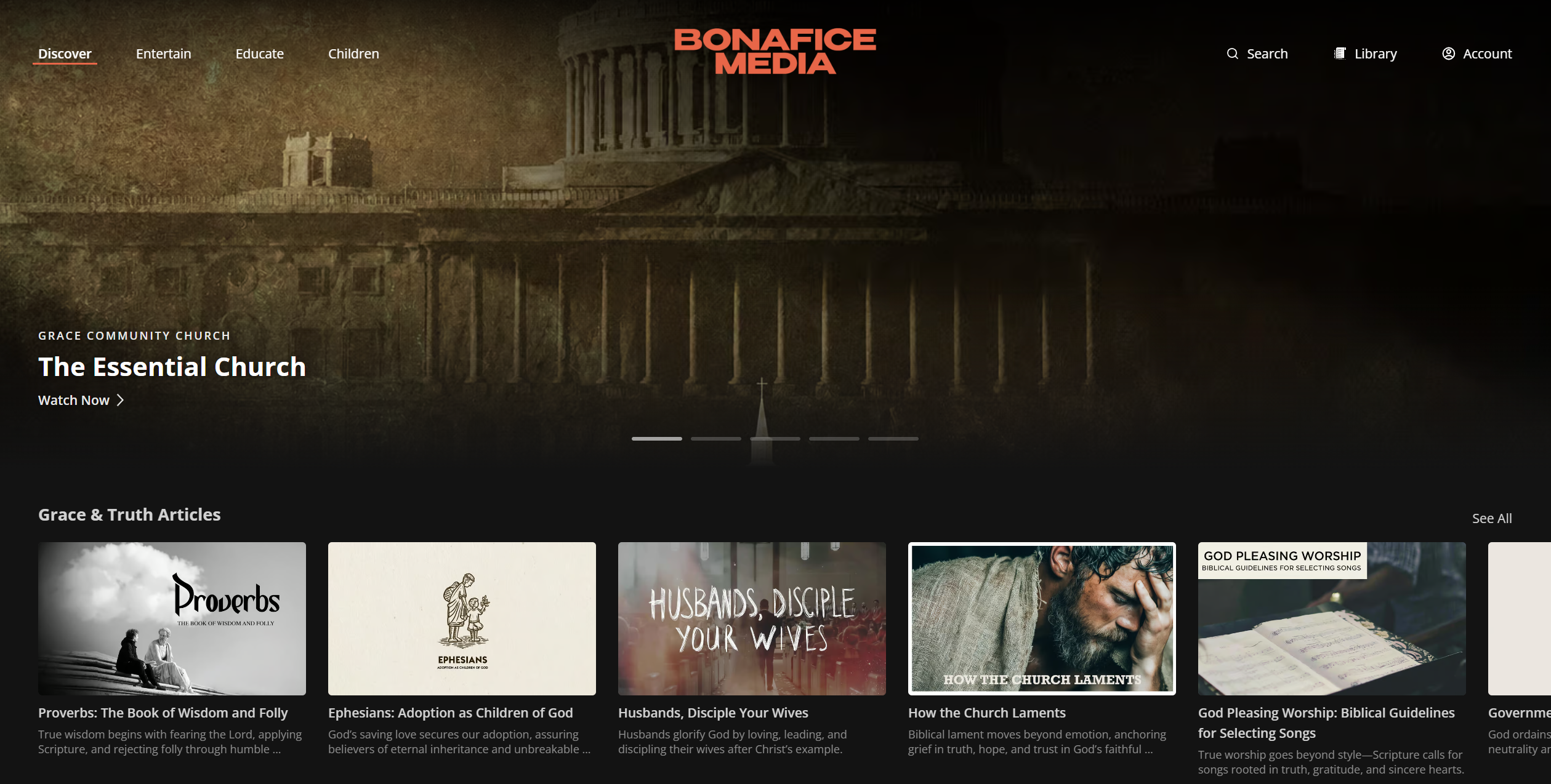
A subscription runs a few dollars a month or a discounted yearly rate and unlocks family playlists, teen-focused apologetics curricula, and short video clips built for exactly the kind of 10 to 20 minute discussion this guide walks through. Getting started takes three steps: create an account, pick a teen apologetics playlist or short curriculum, and put a recurring 30-minute weekly conversation on the family calendar. The Bonafice platform runs on iOS and Android. While there's no dedicated TV app yet, one is planned as budget allows. In the meantime, stream to your television by mirroring your phone or casting through Google Chrome. Start with the free trial account, load one playlist, and have your first conversation before the week is out.
Sources
For deeper study beyond this guide, these sources shaped the recommendations above:
- 7×7 Conversations - Apologetics, Inc.
- What are the best apologetics resources for students? — Sean McDowell
- A practical guide to teaching students apologetics — R. McLaughlin / EQUIP
- Apologetics for Teens – Convincing Proof
This article was created with AI assistance under human direction and review. Bonafice Media uses AI as a tool to be faithfully stewarded, never as a substitute for human judgment, study, creativity, or responsibility. Content is reviewed for accuracy, biblical faithfulness, and clarity before publication. Scripture references use the Legacy Standard Bible as applicable. It's for general educational and informational purposes only and is not professional, legal, financial, or pastoral advice.